The Systemic Error of Cutting Corners on DTP
Desktop Publishing (DTP) and file preparation represent one of the core stages of localization. They form the visual and technical foundation of any document: without expert layout work, even a flawless translation loses its value.
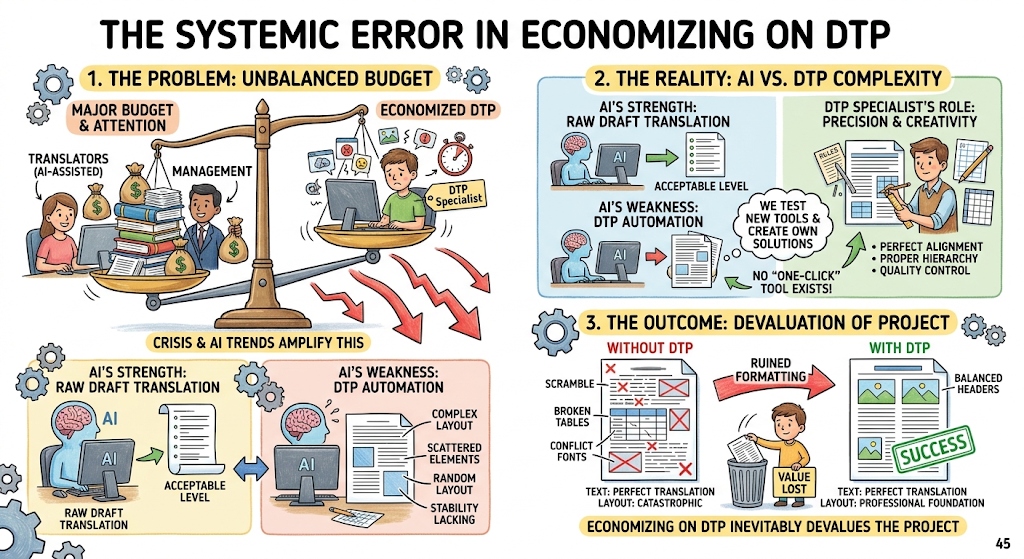
Unfortunately, many translation agencies — including large international LSPs — still treat DTP as a secondary routine task. Most of the budget and management attention go to translators, while DTP is squeezed through lower rates and tighter deadlines. In an era of budget constraints and the AI boom, this trend has only intensified.
Yet this is precisely where a systemic error lies. While artificial intelligence can now produce acceptable draft translations (especially for technical content), neural networks still fail at DTP. Models may occasionally guess basic markup or table positioning, but consistent, production-grade results remain out of reach. We regularly test emerging tools and build our own proprietary solutions, yet no fully automated "one-click" program exists on the market that can handle every DTP challenge. Manual engineering and strict layout quality control remain indispensable.
Sloppy formatting is the very first thing a reader notices. The text may be translated to perfection, but misaligned tables, overlapping text frames, and a broken font hierarchy will render a document unusable. Cutting corners on DTP inevitably devalues the entire localization project.